

High-cycle fastening is a common source of fatigue, discomfort, and injury risk in assembly. When an operator is managing a hand-held tool, reacting torque, reaching for screws, and maintaining positional control, small inefficiencies add up to measurable strain. At the same time, quality teams still need defensive torque verification. Consistent torque audits matter because they provide evidence that joints are being built within spec and that tool control methods are working on the line, not just at setup. Poor torque verification increases the likelihood of loose joints, clamp-load variation, rework, warranty returns, and audit findings in regulated environments.
Engineers and quality teams are typically balancing three decisions:
- How to reduce ergonomic load without introducing new variation in torque application
- How to structure torque audits so results are repeatable and traceable
- How to select tooling and feeding methods that sustain uptime and documentation requirements
Torque arms and screw feeders address the ergonomic side directly, but they also influence torque repeatability, operator influence, and how audits should be executed.
Operator strain in fasting operations
Operator strain usually comes from a combination of factors:
- Reaction torque and kickback from nutrunners and torque screwdrivers
- Static holding while aligning the tool and stabilizing the joint
- Repetitive reach and pinch while picking, orienting, and starting fasteners
- Awkward postures around fixtures, deep wells, or overhead work
Even when the final torque is within spec, higher strain can lead to inconsistent run-down technique, missed steps, or short-cycling. Ergonomics and quality are linked.
Torque arms and reaction control
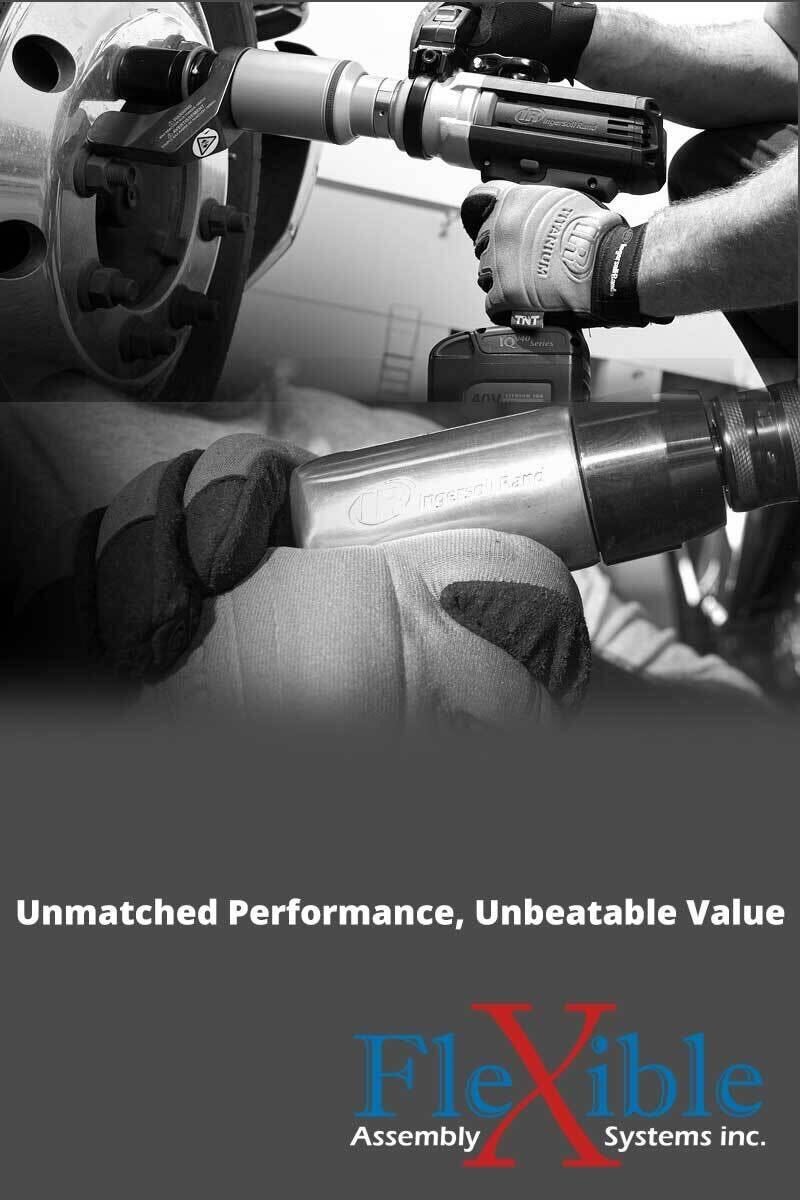
A torque arm (or tool balancer with a reaction mechanism) transfers reaction torque from the operator to a fixed structure. The primary ergonomic benefit is straightforward: the operator guides the tool instead of resisting it. The quality benefit is more subtle: reducing tool “wind-up” and wrist compensation can reduce variation in how the tool is presented to the joint.
Selection and setup considerations
Key technical points to confirm during specification:
- Rated torque capacity with margin above peak reaction torque
- Reach envelope and degrees of freedom to cover all fastener locations without binding
- Reaction point design to prevent slipping and avoid loading the product/fixture
- Tooling mass support (balancer selection) to reduce shoulder load
- Interference control so the arm does not influence seating or access angle
Common limitations:
- Torque arms can restrict access in tight assemblies if the reach and joint layout were not considered early
- Poor reaction point alignment can introduce side-loading, which affects bit wear and may influence seating consistency on delicate electronics hardware.
- Maintenance matters. Worn pivots and loose mounts add compliance and can make tool presentation inconsistent over time.
Screw feeders and fasteners presentation
Screw feeders reduce the highest-frequency ergonomic action in many stations: picking and starting screws. Presenting a screw to the bit (or feeding it through a nosepiece) removes repetitive pinch force and reduces cycle-to-cycle variability in screw start angle.
Where do feeders help most?
Screw feeding typically provides the most benefit when:
- Fasteners are small and numerous (electronics, interiors, appliance sub-assemblies)
- The joint requires controlled starting to prevent cross-threading
- Operators work in constrained access areas where dropped screws cause downtime
- There is a high mix of lengths or head styles that otherwise require manual sorting
Limitations to plan for:
- Part quality sensitivity : burrs, plating variation, and thread debris can increase jams.
- Changeover discipline : mixed screws in a bowl or rail can create intermittent defects that look like tool issues.
- Noise and air consumption (for pneumatic feed systems) may matter in some plants.
Torque verification with testers and torque screwdrivers
Reducing strain does not remove the need for torque verification. It changes the test plan because operator influence is reduced in some ways (reaction torque control) and introduced in others (feed timing, tool handling, bit engagement).
How torque testers are used on the floor?
Torque testers are commonly used for:
- Daily/shift tool checks : confirming the tool is within an allowed window before production and after any tool event
- Layered process audits : periodic checks tied to product family, joint criticality, or regulatory plan
- Post-maintenance verification : confirming output after clutch replacement, transducer service, or controller updates
Best practice is to define the joint type for verification. A static bench test can confirm clutch release behavior, but it does not fully represent a dynamic, prevailing-torque, or seating-sensitive joint. When the joint is sensitive, include a representative joint simulator or a controlled sample joint as part of the audit plan.
Torque screwdrivers in production and audit scenarios
Torque screwdrivers (mechanical, electronic, or controlled DC) are used both as production tools and as audit references. Points that affect results:
- Accuracy vs repeatability : a tool can be repeatable but biased. Audits should look for drift and bias, not just pass/fail.
- Operator influence : bit engagement angle, push force, and dwell after shutoff can change readings, especially on small fasteners.
- Calibration and traceability : define calibration intervals based on cycles, criticality, and observed drift rather than calendar-only assumptions.
For documentation, capture:
- Tool ID and serial number
- Calibration due date and last calibration reference
- Audit date/time, auditor ID, and station
- Fastener/joint ID and target with allowed limits
- Measured results, including any retest rationale
Practical audit workflow when torque arms and feeders are added
When a station is upgraded with a torque arm and screw feeder, treat it as a process change. A practical approach:
- Re-baseline torque results with the new mechanical setup (arm, balancer, feed nosepiece).
- Validate access and angle for every fastener location; ensure the arm does not force a misalignment.
- Confirm bit wear rate changes; feeding systems can change engagement dynamics.
- Update audit frequency based on observed stability and any early drift.
- Train to a standard method : consistent seating, consistent dwell, and consistent handling of misfeeds or rework.
Why Choose Flexible Assembly Systems?
Flexible Assembly Systems supports engineers and quality teams who need fastening processes that are defensible and maintainable. That includes helping select torque arms and screw feeding equipment that match joint layout, torque range, and station constraints, and aligning those choices with practical torque audit methods. Support also covers calibration planning, traceability expectations, and documentation needs commonly found in automotive, aerospace, electronics, and industrial assembly environments, where audit trails and repeatable verification methods are part of normal operations.
Conclusion
Torque arms and screw feeders reduce operator strain by removing reaction torque and repetitive fastener handling from the highest-cycle parts of the job. The quality impact is positive when these devices are specified and maintained correctly, but torque verification still needs to be structured around the real joint and the real station conditions. Treat ergonomic improvements as process changes, re-baseline torque performance, and build an audit workflow that captures repeatable data with clear traceability
