

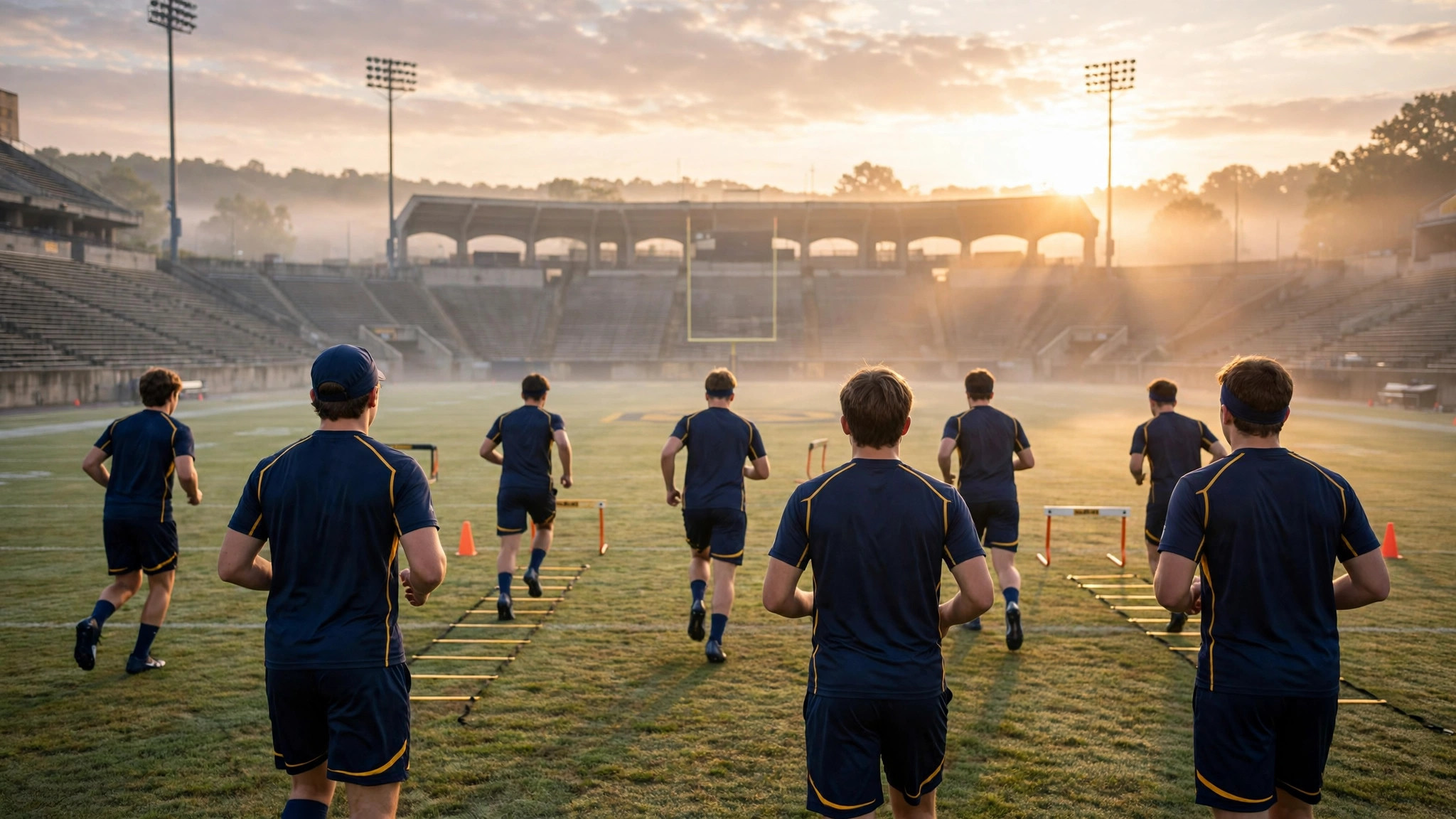
For a certain kind of fan, the season never ends — it just moves to the recruiting trail. Notre Dame football recruiting is a year-round national drama of campus visits, commitment announcements, and signing days, followed by an audience that treats a seventeen-year-old’s college choice like breaking news. If that sounds like your people, welcome home.
This guide explains how notre dame football recruiting actually works: the calendar that governs it, how classes are ranked, what makes Notre Dame’s pitch different from every other powerhouse, and where to follow the news without drowning in rumor. One ground rule before we start: this guide explains the system, not specific prospects — because in recruiting, today’s headline is tomorrow’s footnote, and the only facts worth printing are the ones the university confirms.
Notre Dame Football Recruiting: The Year-Round Season
Start with the mindset. Notre dame football recruiting is not an offseason hobby at a program like this; it is a full-time operation run by a dedicated staff, aimed at high school players across the entire country. Because Notre Dame is in South Bend but recruits everywhere, the Irish staff logs more miles than almost anyone — California one week, Texas the next, then back across the Southeast.
The work follows a rhythm fans can learn. Evaluation comes first, as coaches study film and visit schools. Offers follow for the players who fit. Then come the visits — unofficial trips paid by families, and the official visits where the university hosts a prospect and sells the full Notre Dame experience. Finally, commitments: public announcements that bind nothing legally until a player signs during the official signing periods.
Understanding that rhythm turns recruiting from noise into a story with chapters. The fans who enjoy it most are the ones who know which chapter the calendar is in — and who never panic in the early ones.
How Recruiting Rankings and Classes Work
Every class is graded, ranked, and argued about by the major recruiting services, which evaluate thousands of high school players and assign star ratings — five stars for the very best prospects, down through the classes. Team rankings then aggregate each school’s commitments into a single number that fans quote like gospel every February.
Here is the honest context those rankings deserve. They are useful, genuinely — the services see a lot of football, and highly ranked classes do correlate with winning. But they are projections about teenagers, made years before those players face a college pass rush. Notre Dame’s own history, like every program’s, includes celebrated signees who never started and unheralded ones who became stars.
The healthiest way to read a notre dame football recruiting ranking is as a weather report: informative, worth checking, and absolutely not a guarantee about Saturday. What matters more is fit — whether the class fills the roster’s actual needs at the positions where the depth chart is thin. A class ranked slightly lower that lands its quarterback and rebuilds its defensive line is a better class than a prettier ranking built on duplicates.
The Notre Dame Pitch: Academics, Independence, and the National Stage
What does Notre Dame sell that nobody else can copy exactly? The pitch starts with the combination: elite academics and elite football, in one place, on national television, with a degree that carries weight in every boardroom in America. Recruits hear some version of the “four years versus forty years” argument — choose the place that sets up your whole life, not just your playing career — and at Notre Dame it lands because the alumni network makes it true.
Independence strengthens the pitch. The Irish play a national schedule, in marquee games, with home broadcasts traditionally on NBC — exposure a recruit can set his watch by. Add Notre Dame Stadium, the golden helmets, and a fan base in every state, and the recruiting visit becomes an argument few programs can answer.
The academic identity does narrow the pool honestly. Notre Dame recruits players who can succeed in its classrooms, and the staff is direct about that standard from the first conversation. Fans should understand the trade: a slightly smaller pond, fished with unusual care, by a program that has turned that selectivity into a brand rather than an excuse.
Football Recruiting Notre Dame
If the phrase football recruiting notre dame sounds like a search query, that is because millions of fans type some version of it every year. What they are really asking is: what happens when? The recruiting calendar answers that, and it has a shape every fan should know.
The year flows through distinct periods set by NCAA rules: quiet periods, evaluation windows, and dead periods when contact stops, each governing what coaches may do and when prospects may visit. Layered over that calendar are the two signing periods — an early signing window in December and the traditional February signing day — when verbal commitments become signed, binding agreements.
The transfer portal has added a second calendar entirely. The portal’s windows bring a fast, compressed version of recruiting played with college veterans instead of high schoolers, and Notre Dame participates selectively, targeting experience at positions of need. Modern fans effectively follow two recruitments now: the high school class, built slowly, and the portal class, built in a rush.
Key moments in the recruiting year:
- Spring evaluation, when coaches hit the road and new offers go out
- Summer official visits, when top targets experience campus with their families
- The early signing period in December, when most of the class signs
- Traditional signing day in February, the sport’s original recruiting holiday
- Portal windows, when veteran transfers move quickly between programs
Where to Follow Irish Recruiting News
The official word on any signing comes from exactly one place: the university itself. The athletics site, UND.com, announces signed classes, and on signing day its coverage is the only version that counts as fact. Everything before a signature — commitments, predictions, crystal-ball picks — is reporting and rumor in varying proportions, and wise fans label it that way in their own heads.
Beyond the official channel, major recruiting services and Notre Dame beat outlets provide the daily coverage: visit news, commitment timelines, and class analysis. Following one or two trusted outlets beats following twenty anxious ones. Recruiting news has a half-life of about a day; the outlets worth your time are the ones that tell you what changed and how much it matters, not just that something might.
Fans building a full Irish information diet usually pair recruiting coverage with the main team guides — our Notre Dame football schedule guide shows the stages these recruits are signing up to play on, and our Duke football guide covers another program that recruits on an academics-plus-football pitch.
From Commitment to Campus: What Happens Next
A signed letter is the middle of the story, not the end. Signees finish high school, some enroll early to join spring practice, and all of them discover the gap between being a celebrated recruit and earning a college snap. At Notre Dame, early enrollees get a genuine head start: a semester of strength training, playbook study, and classroom adjustment before their first fall camp.
Then comes development, the phase recruiting rankings cannot measure. The Notre Dame model leans on it — players are coached, physically developed, and often asked to wait behind veterans before their moment arrives. Fans who followed a player’s recruitment for two years sometimes forget him during two quiet seasons, right before he emerges as a starter. In South Bend, that arc is not a failure of recruiting. It is frequently the design.
Understanding this arc makes you a better recruiting fan. You stop demanding that every signee star immediately, and you start watching the roster like a garden instead of a scoreboard — which, over a full cycle, is exactly how the staff watches it too.
How Recruiting Connects to Saturdays
The final connection is the one that matters most. Recruiting is roster construction, and roster construction is Saturday’s depth chart, two to four years early. When you watch the Irish rotate defensive linemen without a drop-off, you are watching three recruiting classes doing their job. When a thin position group gets exposed in November, you are watching the class that did not get built.
Game-day context helps fans judge it fairly. Our explainer on how long a football game lasts is a small thing, but the principle is the big one: college football asks a roster for sixty full minutes, week after week, and only genuinely deep classes survive that arithmetic. Recruiting is how depth is bought in advance.
So follow the trail with enthusiasm and proportion. Celebrate signing day — it is a holiday in South Bend for a reason. Then let the coaches coach, the players grow, and the classes prove themselves where every notre dame football recruiting argument is finally settled: on the field, under the lights, in front of Touchdown Jesus.
A Word of Proportion for Recruiting Fans
One last piece of guidance, offered kindly: remember that recruiting is about teenagers making the biggest decision of their young lives, with their families, under a spotlight they did not fully choose. The healthiest notre dame football recruiting fans celebrate the players who choose South Bend, wish the others well, and never confuse a seventeen-year-old’s college pick with a personal verdict on their own fandom.
That proportion is part of why notre dame football recruiting coverage at its best feels different — the program’s pitch is about a whole life, after all, and fans who believe the pitch tend to extend its grace to the process. Enjoy the drama, follow the visits, argue about the class rankings with your friends. Just keep the main thing the main thing: young men choosing a future, and a university that has to earn those choices one family at a time.
Frequently Asked Questions
When do Notre Dame recruits officially sign?
During the NCAA signing periods — an early window in December and the traditional signing day in February. Verbal commitments before those windows are non-binding.
How are recruiting classes ranked?
Recruiting services rate individual prospects with star ratings and aggregate each school’s signed or committed class into team rankings. They are useful projections, not guarantees.
Does Notre Dame use the transfer portal?
Yes, selectively. The Irish target experienced players at positions of need during the portal windows, complementing the high school class rather than replacing it.
Where is recruiting news official?
Only the university’s announcements of signed players are official. Everything earlier is reporting about intentions, which can and do change.
The Bottom Line
Notre Dame football recruiting is the program’s future being negotiated in public, one campus visit at a time. Learn the calendar, read the rankings with a smile and a grain of salt, trust only the signatures, and remember that the quiet sophomore in this year’s class may be the name on everyone’s lips two autumns from now.
Follow it that way, and the trail becomes one of the great pleasures of being an Irish fan — a second season, running all year, that ends exactly where it should: at the tunnel, under the sign, in gold helmets.
