

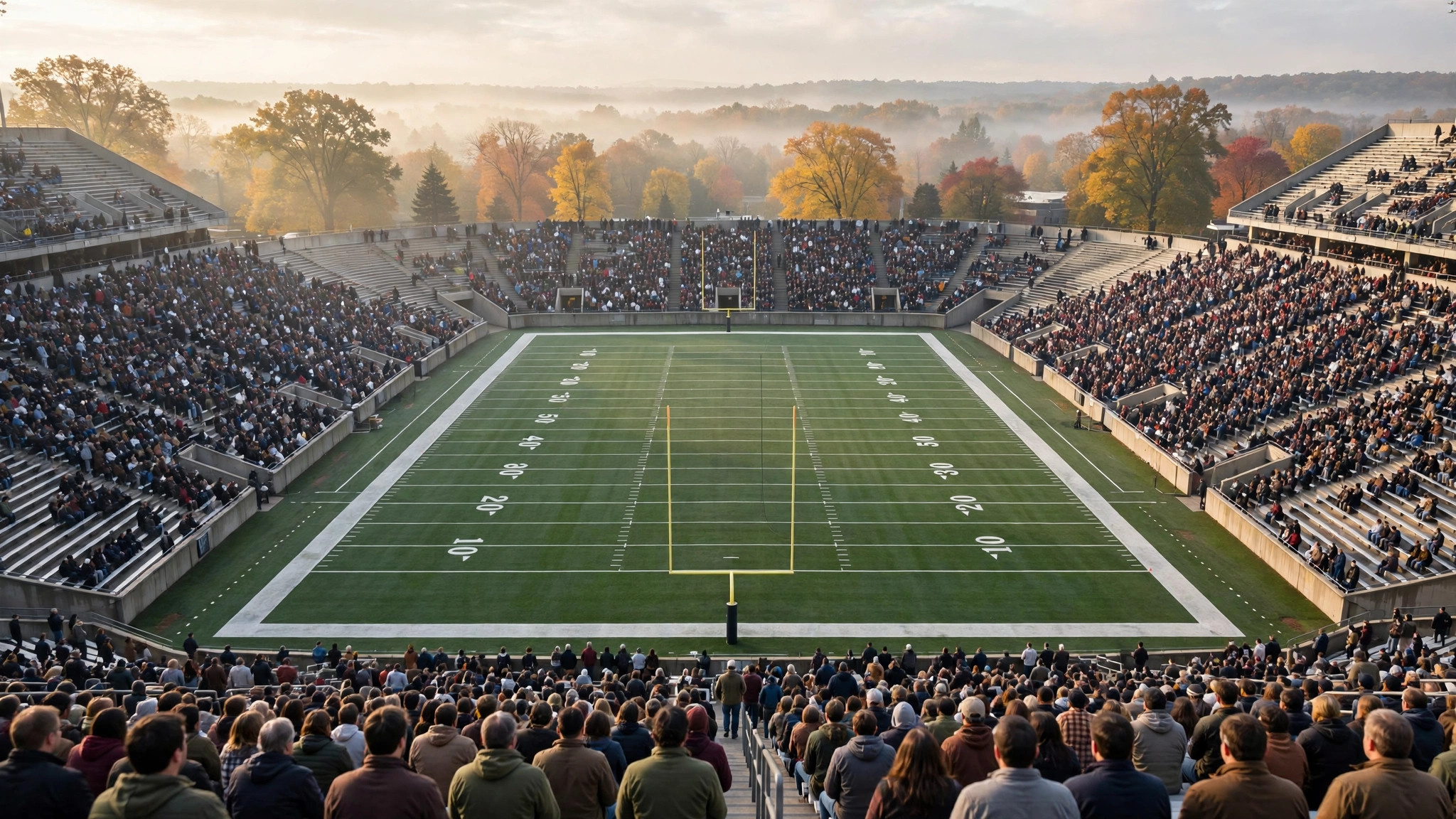
Every fall, the same question lands in group chats across the country: who plays this week, when, and where can I watch? The ncaa football schedule answers all of that, but only if you understand how the calendar is built. College football does not drop its fixtures in one neat list. It assembles them from conference obligations, long-term non-conference contracts, television windows, and tradition — and the result is a season that unfolds in clear, predictable phases.
This guide breaks the calendar down week by week in general terms: how the regular season is structured, when conference play takes over, what championship weekend means, and how bowl season and the playoff finish the year. Once you see the skeleton, you can read any single team’s schedule and know exactly where the danger and the drama sit.
How the Schedule Is Built
An FBS team’s regular season is built around 12 games. Most of those — eight or nine, depending on the conference — are league games set by the conference office years in advance on a rotating model. The remaining games are non-conference matchups that schools schedule themselves, sometimes a decade ahead, through contracts that specify dates, venues, and guarantees.
Layered on top of that is television. Networks hold the rights to each conference’s games and select which matchups fill their best windows, often deciding kickoff times only six to twelve days before a game. That is why so many listings show “TBA” deep into the season: the date is fixed, but the hour waits on TV.
Other building blocks matter too:
- Bye weeks: Each team gets open weeks built into its calendar for rest — usually one, sometimes two, depending on how the calendar falls.
- Home and away balance: Schedules alternate venues in multi-year series, so a big road game this year usually means the return game at home in a future season.
- Neutral-site openers: A handful of marquee games are staged in NFL stadiums to open the season, agreed as special events.
- Weeknight games: Smaller conferences often play on Tuesdays, Wednesdays, and Fridays for television exposure, creating the midweek football fans either love or tolerate.
The NCAA’s reference pages explain how the top level is structured, and NCAA.com’s college football TV schedule guide is the practical place to confirm weekly kickoff times and channels as networks announce them.
NCAAF Schedule
The shorthand ncaaf schedule refers to the same national calendar, and its first phase is the soft launch. A small set of “Week Zero” games is played in late August, often involving teams granted permission to start early because of special circumstances such as a game in Hawaii or an international kickoff event. The full slate then begins over the Labor Day weekend, when nearly every program plays its opener.
September is the season of discovery. Non-conference games dominate the early weeks, and the results are gloriously misleading: contenders schedule tune-ups, ambitious programs schedule measuring-stick road games, and at least a few September giants turn out to be mirages by Halloween. Conference play begins sprinkled through the month and takes over as October approaches.
For fans, September’s job is simple — learn which teams are real. Watch how offensive lines and new quarterbacks handle their first road environments, because those answers shape everything the standings will say later. Team schedule pages like our guide to the Michigan football schedule show how a major program’s September typically mixes home tune-ups with one headline non-conference test.
October and November: Conference Play Decides Everything
From October onward, the calendar belongs to the conferences. Almost every game now affects a standings table, and the sport’s rhythm becomes relentless: a ranked team somewhere is playing a dangerous road game every single week.
Two features define this stretch. The first is the elimination effect. Playoff hopefuls can survive September experiments, but conference losses pile up quickly, and by mid-November the championship-game races in most leagues narrow to two or three teams with clear tiebreaker paths.
The second is rivalry week, traditionally built around the Thanksgiving weekend at the end of November. The sport’s oldest grudge matches — the games alumni circle before the season even starts — close the regular season and regularly wreck playoff plans. It is the best weekend on the calendar precisely because nothing about it is predictable.
Practical tip for this stretch: kickoff times firm up late, so check your team’s official schedule page on the Monday of game week rather than trusting a time printed months earlier. Our look at the Clemson football schedule shows how a contender’s autumn is usually anchored by two or three season-defining conference dates.
Championship Weekend and What Comes After
The first weekend of December belongs to conference championship games. All ten FBS conferences stage a title game, matching their best teams — usually the top two in the standings — at predetermined or campus sites depending on the league. These games carry enormous weight now: conference champions are central to the College Football Playoff format, so championship weekend effectively serves as the playoff’s opening act.
Once the title games end, the postseason splits in two directions:
- The College Football Playoff: Twelve teams, seeded by the selection committee, playing first-round games on campus, then quarterfinals and semifinals in major bowls, and a January national championship game.
- Bowl season: Dozens of additional games through December and early January, rewarding six-win teams with a final showcase and fans with near-daily football over the holidays.
Selection Sunday, the day after championship weekend, is when it all becomes official: the playoff bracket, the bowl pairings, and the final rankings arrive within hours of each other. If you follow the calendar all season, that Sunday feels less like news and more like confirmation of a story you have watched build since August.
NCAA Football Games
The FBS gets the spotlight, but the full national picture is bigger. NCAA football games are also played across the FCS, Division II, and Division III throughout the same autumn, and those levels run traditional seeded playoffs — larger brackets that begin in late November and crown champions in December and January.
Their calendars rhyme with the FBS version: regular seasons through November, then win-or-go-home football. For fans near a smaller program, that structure is arguably purer, since every conference race leads directly into a bracket. Many score and schedule platforms let you filter by division, so you can track a local FCS playoff run alongside the FBS title race without mixing the two.
Understanding the divisions also clarifies the early-season schedule. September’s famous mismatches usually pair an FBS program with an FCS opponent under a guarantee contract — games that fund smaller athletic departments and fill out home schedules, and that occasionally produce the upsets fans remember for decades.
Reading a Single Team’s Schedule at a Glance
Once you know the national phases, a single team’s fixture list reads like a story with a beginning, a climb, and a climax. Coaches and analysts use the same quick scan, and you can learn it in one sitting.
Start with the non-conference slate. One headline opponent usually signals ambition; a soft September usually signals a young roster or a coach protecting a rebuilding year. Next, find the conference road games. The hardest dates on any schedule are rarely the famous home games — they are the October road trips to solid league opponents, back to back, with no bye between them.
Then check where the bye weeks fall. A bye before a rivalry game is a gift. A bye in September followed by ten straight weeks of football is a grind that tests depth in November. Finally, look at the finish: many contenders face their two hardest conference opponents in the final three weeks, which is why so many promising seasons wobble right at the end.
Apply that scan to any program’s fixture list and you can predict, before a ball is kicked, roughly where its season will be won or lost.
Why the Calendar Keeps Changing
If the schedule feels less predictable than it used to, you are not imagining it. Conference realignment has moved famous programs into new leagues, which rewrites rotation models and strands some historic rivalries as occasional non-conference events instead of annual fixtures. Conferences have also scrapped divisions in recent years, sending their two best overall teams to the championship game rather than two division winners.
Television continues to reshape the week as well. Streaming platforms and weeknight windows have spread games from Tuesday through Saturday in the season’s second half, and the expanded playoff has pushed the sport’s finish deeper into January than the old bowl calendar ever did.
The smart response is not to memorize one year’s dates. It is to learn the structure — twelve games, conference first, championships in December, playoff in January — because the structure survives even when the details move. Dates change every season. The rhythm does not.
How to Use the Schedule as a Fan
A few habits turn the calendar from a wall of dates into a tool:
- Build your personal schedule around anchors: your team’s games, two or three rivalry fixtures, and championship weekend. Everything else can be optional viewing.
- Respect the bye weeks: a team coming off a bye, at home, against a rival on a short week is one of the schedule’s oldest advantages.
- Watch kickoff announcements: big games land in prime time; if your team’s game moves to a night window, the networks are telling you it matters.
- Plan travel early: homecoming and rivalry weekends sell out hotels in college towns months ahead. Knowing the rhythm of a game day helps too — our explainer on how long a football game lasts is worth reading before you plan a same-day drive home.
Frequently Asked Questions
When does the college football season start?
A small Week Zero slate is played in late August, and the full season opens around the Labor Day weekend in early September.
How many games does a college team play?
FBS teams play 12 regular-season games. Teams that qualify can add a conference championship game, playoff games, or a bowl game on top of that.
Why are so many kickoff times listed as TBA?
Television networks choose their best matchups close to game day. Dates are set far in advance, but kickoff times and channels are often confirmed only one to two weeks ahead.
When are conference championship games played?
They are held on the first weekend of December, at the end of the regular season, across all ten FBS conferences.
When does the season end?
Bowl games run through December and early January, and the College Football Playoff National Championship game closes the season in mid-January.
The Bottom Line
The ncaa football schedule looks complicated until you see its phases: a gentle August launch, a discovery month in September, conference combat through October and November, championship weekend in December, and a postseason that stretches into January.
Learn those phases once, and every team’s fixture list becomes readable at a glance. You will know which Saturdays matter, which kickoffs to wait for, and exactly when the season’s story reaches its loudest chapters.
