

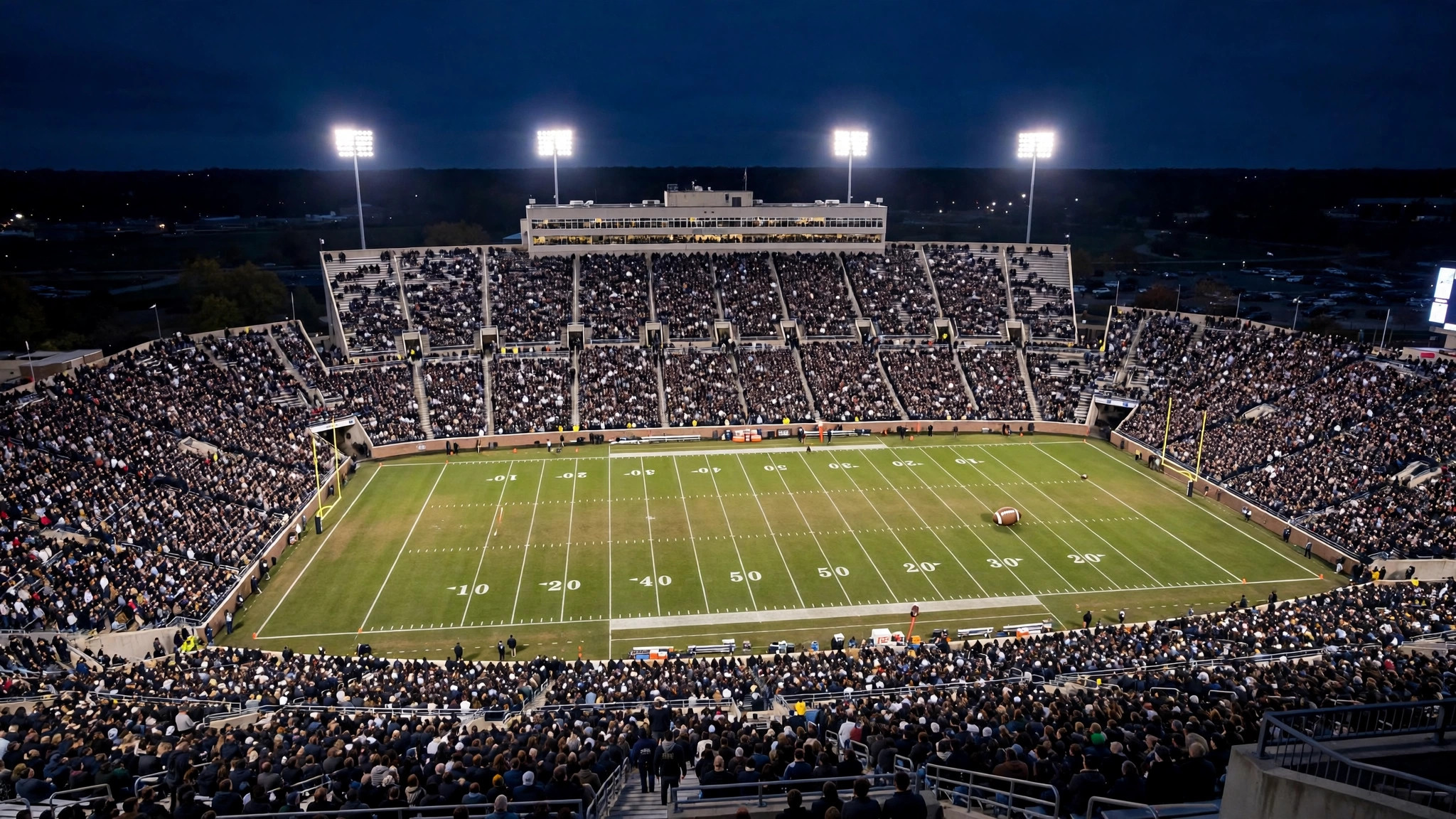
There is loud, there is Saturday-night loud, and then there is Baton Rouge. Lsu football is one of college football’s great sensory experiences: more than 100,000 people in purple and gold, a live tiger as a mascot, tailgates that start days before kickoff, and a stadium where night games feel less like sporting events and more like weather systems moving in.
This guide covers everything a fan needs to know about lsu football — the program’s history and national championships, the legend of Tiger Stadium and Death Valley, the rivalries that define the autumn, how the roster is built, and the practical basics of tickets and following the Tigers through an SEC season. Whether you are a lifelong supporter or a neutral fan planning your first trip, start here.
LSU Tigers Football
The LSU Tigers football program dates back to 1893, making it one of the oldest in the South. LSU was a founding member of the Southeastern Conference, and over more than a century the Tigers have grown from a regional power into one of the sport’s true heavyweight brands, with a recruiting footprint and a television profile to match.
The championship shelf tells the story. LSU claims national titles in 1958, 2003, 2007, and 2019 — and each one carries its own mythology. The 1958 team finished unbeaten behind Billy Cannon, who won the Heisman Trophy the following season. The 2003 and 2007 titles came in the modern SEC era, proof that the Tigers could survive the toughest conference schedule in America and still finish on top.
Then came 2019, the season LSU fans measure everything against. That team went 15–0, won the national championship, and produced a Heisman-winning quarterback season from Joe Burrow that is still talked about as one of the greatest single campaigns in the sport’s history. Jayden Daniels added another Heisman for the program in 2023, keeping LSU’s reputation as a place where elite quarterbacks and receivers come to become stars.
Tiger Stadium and the Death Valley Legend
Tiger Stadium opened in 1924 with room for just 12,000 fans. A century of expansions later, it holds 102,321 people, making it one of the largest stadiums in college football and the beating heart of lsu football. Its nickname — Death Valley — is not marketing. It is a warning visiting teams have repeated for generations.
The stadium’s fame rests on night games. LSU’s tradition of playing under the lights turned Saturday night in Baton Rouge into a phrase the whole sport recognizes. The crowd noise, the band, and the fourth-quarter singalong to “Callin’ Baton Rouge” create an atmosphere that opposing players and coaches regularly describe as the hardest road environment in America. For the full structural history of the building, the Tiger Stadium page on Wikipedia documents every expansion from 12,000 seats to today’s capacity.
A few game-day landmarks every visitor should know:
- Mike the Tiger: LSU’s live Bengal tiger mascot, whose habitat sits beside the stadium
- The Tiger Marching Band: One of the South’s great bands, central to the pregame show
- The tailgate scene: Widely considered among the best in America, famous for its food
- Saturday night kickoffs: The slot every LSU fan wants and every visitor fears
Louisiana LSU Football
To understand louisiana lsu football, you have to understand that LSU is not just a university team — it is the state’s team. Louisiana has no NFL franchise competing for the same emotional space in Baton Rouge’s backyard, and the Tigers carry the hopes of an entire state in a way few programs do. On fall Saturdays, purple and gold appear everywhere from New Orleans to Shreveport.
The food culture alone separates LSU from almost everywhere else. Tailgating in Baton Rouge means gumbo, jambalaya, boudin, and crawfish when the season allows, cooked by families who have held the same spots for decades. Visiting fans are famously fed before they are heckled, which might be the most Louisiana sentence ever written about football.
That culture also explains the program’s recruiting strength. Louisiana produces elite football talent at a remarkable rate for its size, and lsu football has built its foundation on keeping that talent home, then adding national stars around it. The result is a roster that almost always looks like an NFL pipeline — because it is one.
If you enjoy comparing SEC powers, the Tigers’ story pairs well with our guides to the Georgia football schedule and the other heavyweights LSU measures itself against every autumn.
The Rivalries That Define the Season
LSU’s calendar is loaded with games that carry their own names, trophies, and grudges. Three rivalries stand above the rest, and each one shapes how a season feels in Baton Rouge.
The Battle for the Golden Boot, vs Arkansas. Played since the teams became SEC rivals, this game awards the Golden Boot trophy — a heavy gold trophy shaped like the connected outlines of Arkansas and Louisiana, first awarded in 1996. The series began back in 1901, but the trophy era gave it its modern identity.
The Magnolia Bowl, vs Ole Miss. LSU and Ole Miss first met in 1894 and have played almost every year since the 1940s. The game was formally named the Magnolia Bowl in 2008, after the flower both states share. At its 1950s and 1960s peak, this was one of the biggest rivalries in the entire country.
Alabama. No trophy, no cute name — just two proud programs, a century of history, and games that regularly decide the SEC and national picture. For many LSU fans, this is the date circled first. Our look at the Alabama football schedule shows the other side of that annual heavyweight fight.
Add Florida, Auburn, and Texas A&M to the mix, and you see why the SEC schedule is considered a weekly survival test. There is no soft month in an LSU season.
How the Tigers’ Roster Is Built
Modern lsu football rosters are built in three layers. The foundation is Louisiana high school recruiting, where LSU’s brand is overwhelming. The second layer is national recruiting at premium positions — quarterbacks, edge rushers, cornerbacks, and receivers — where the Tigers compete with every blue blood in the country. The third layer is the transfer portal, which LSU has used aggressively to fill immediate needs with experienced starters.
The development story matters just as much. LSU sends players to the NFL Draft in bulk, year after year, particularly at wide receiver and defensive back — the two position groups where the program’s reputation is almost unmatched. That pipeline is itself a recruiting pitch: come to Baton Rouge, play in Death Valley, leave as a high draft pick.
Fans tracking the weekly picture should watch the official depth chart releases, because LSU’s two-deep usually features freshmen talented enough to start almost anywhere else. It is a good problem, and it is a permanent one.
LSU Men’s Football
A note for new international fans: searches for lsu men’s football simply mean the Tigers’ (men’s) American football team — LSU fields one football program, and this is it. If you are planning to see it live, tickets for big SEC games at Tiger Stadium are among the most in-demand in the country.
Practical basics for a first trip:
- Buy through official channels first — the university ticket office and official exchanges are the safest route
- Book lodging early — Baton Rouge fills completely on big game weekends
- Arrive hours ahead — the tailgate and band performances are part of the ticket price in spirit
- Stay for the fourth quarter — the “Callin’ Baton Rouge” moment is the one everyone remembers
Watching from home is simpler. LSU games anchor national SEC television windows, and kickoff times are typically announced one to two weeks ahead. Checking the wider conference calendar, including the Tennessee football schedule, helps you plan the full Saturday around the Tigers’ slot.
Following the Tigers All Season
The rhythm of an LSU season is relentless: a marquee nonconference test early, then the SEC gauntlet, the Golden Boot and Magnolia Bowl dates, the Alabama game, and — in the years everything breaks right — a December and January spent chasing championships in the College Football Playoff era.
Through it all, Death Valley waits. Programs rise and fall, coaches come and go, and rosters turn over every few years, but a Saturday night in that stadium remains one of the constants of American sports.
LSU Football Traditions Every Fan Should Know
Traditions are the glue of lsu football, and Baton Rouge does them as well as anywhere in the country. Start with the walk: hours before kickoff, the team descends the hill into Tiger Stadium through a corridor of fans, led by the band, in one of the great pregame processions in the sport. Get there early enough to see it, because for many fans it is as memorable as the game itself.
Then there is the sound. The Tiger Marching Band’s pregame show, the first four notes of the fight song echoing around a bowl of 102,321 people, and the student section in full voice give Death Valley a soundtrack that television only partly captures. The “Geaux Tigers” spelling — a nod to Louisiana’s French heritage — appears on everything, and newcomers learn quickly that “Geaux” is pronounced exactly like “Go.”
The food deserves its own paragraph. Tailgating at LSU is a culinary competition disguised as a party: pots of gumbo big enough to feed a section, jambalaya cooked on site, and visiting fans routinely invited to eat by strangers in purple and gold. It is hospitality with a competitive streak, and it is a huge part of why neutral fans rank a Baton Rouge Saturday among the best trips in college football.
Finally, there is the night itself. LSU’s preference for night kickoffs is famous across the SEC, and the winning tradition under the lights in Death Valley is a point of genuine pride. When the sun goes down over the Mississippi River and the stadium lights take over, lsu football becomes the version of itself that the whole country recognizes.
LSU Football FAQ
What is LSU’s stadium called?
Tiger Stadium in Baton Rouge, nicknamed Death Valley. It holds 102,321 fans and opened in 1924.
How many national championships has LSU won?
LSU claims four national titles: 1958, 2003, 2007, and 2019.
What are LSU’s colors and mascot?
Purple and gold. The mascot is Mike the Tiger — including a live Bengal tiger whose habitat is next to the stadium.
What is the Golden Boot?
The trophy awarded to the winner of the LSU–Arkansas game, first presented in 1996 and shaped like the two states joined together.
What conference does LSU play in?
The Southeastern Conference (SEC), of which LSU is a founding member.
Final Thoughts
Lsu football is tradition with the volume turned all the way up: a 100,000-seat cathedral, a live tiger, the best tailgate food in the country, and a program that has won national titles in three different eras of the modern game. Add the rivalries, the NFL pipeline, and those Saturday nights in Death Valley, and you have one of the essential experiences in American sports.
Whether you follow the Tigers every week or you are just planning one pilgrimage to Baton Rouge, the advice is the same: go at night, arrive hungry, and do not leave early. Geaux Tigers.
