

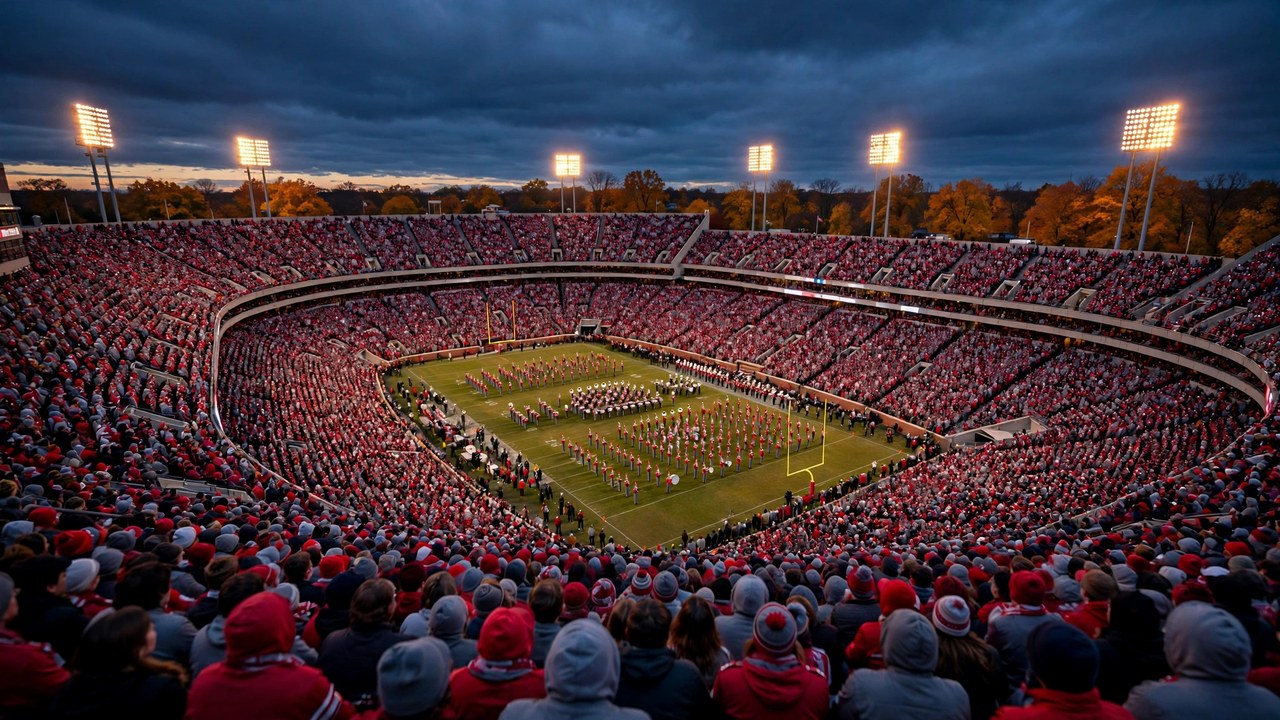
Few programs in college sports carry the weight of Ohio State football. The Buckeyes play in front of more than 100,000 fans at Ohio Stadium, wear one of the most recognizable uniforms in America, and enter almost every season with national championship expectations. Whether you are a new fan trying to understand the hype or a lifelong supporter planning your next trip to Columbus, this guide covers the history, the stadium, the roster basics, the traditions and the smartest ways to follow the team.
Ohio State has fielded a football team since 1890, and the program has grown into a cornerstone of the Big Ten Conference and of college football itself. The formula has stayed remarkably consistent for more than a century: elite recruiting, massive fan support, and a standard that treats anything short of beating Michigan and contending for titles as a disappointment.
OSU Football
OSU football is shorthand fans and broadcasters use for the program run by Ohio State University’s athletic department in Columbus, Ohio. The Buckeyes compete in the NCAA Division I Football Bowl Subdivision (FBS) as members of the Big Ten, one of the sport’s power conferences.
On a practical level, following OSU football means tracking a few things through the year:
- The regular season schedule, which runs from late August or early September into late November
- The annual rivalry game against Michigan, known simply as The Game, which closes the regular season
- The Big Ten championship race and the College Football Playoff picture
- Recruiting news, which runs all year and shapes the roster two to three seasons ahead
- The NFL Draft each spring, when Buckeyes regularly leave for the professional ranks
The program’s official home for schedules, rosters and ticket information is the university’s athletics website, and the team’s own Wikipedia reference page is a handy, well-maintained summary of records, seasons and honors for quick fact-checking.
Ohio State Buckeyes
The Ohio State Buckeyes take their name from the buckeye tree, the state tree of Ohio, and from the nickname Ohioans have carried for generations. The team’s colors are scarlet and gray, and its mascot, Brutus Buckeye, is one of the most popular in college sports.
The Buckeyes’ trophy case explains their reputation. Ohio State claims nine national championships, won in 1942, 1954, 1957, 1961, 1968, 1970, 2002, 2014 and 2024. The 2002 team famously upset a heavily favored Miami squad in double overtime to win the BCS title, and the 2014 team won the first-ever College Football Playoff. The 2024 team then captured the championship in the first season of the expanded 12-team playoff, cementing the program’s place in the modern era.
Individual honors stack up just as high. Archie Griffin remains the only player in history to win the Heisman Trophy twice, taking college football’s top award in 1974 and 1975. His number 45 is among the retired jerseys honored at Ohio Stadium, and generations of Buckeye running backs have been measured against his standard.
Buckeyes Football
Buckeyes football culture is built on rituals that fans plan their autumns around. Some traditions are famous nationwide; others are small superstitions passed down through families in Columbus and across Ohio.
The most beloved ritual belongs to the marching band, known as The Best Damn Band in the Land. Before home games, the band performs Script Ohio, spelling out “Ohio” in script on the field while a sousaphone player “dots the i” — an honor so prized that the i-dotter is celebrated like a star player. The band also holds its traditional Skull Session pep rally before home games, a custom that dates back decades.
Other game-week staples include:
- The Michigan rivalry: The Game is arguably the fiercest rivalry in American sports, and the week before it, campus playfully bans the letter “M” — even crossing it out on signs.
- Buckeye leaves: Players earn small buckeye leaf stickers on their helmets for big plays and strong performances, a tradition started in the Woody Hayes era.
- Carmen Ohio: The school’s alma mater, sung by the team and crowd after games, win or lose.
To see how these traditions fit into a full season, browse our Ohio State football schedule guide, which walks through the dates, opponents and key games year by year.
Buckeyes
Ask a dozen Buckeyes fans what defines the program and you will hear the same themes: toughness in the trenches, speed on the outside, and a defense expected to reload every year no matter how many starters leave for the NFL. Ohio State’s recruiting operation is central to that identity. The Buckeyes consistently sign classes ranked among the nation’s best, drawing five-star talent from Ohio and from football hotbeds across the country.
The roster itself turns over quickly, as it does everywhere in the transfer-portal era, but the structure is stable. A typical Ohio State roster carries multiple scholarship quarterbacks, a deep rotation of receivers — the program has become famous for producing NFL wide receivers — and a defensive line built to rotate fresh pass rushers in waves. Fans who enjoy the matchup details can dig into our breakdown of Indiana Hoosiers vs Ohio State Buckeyes player stats to see how the numbers behind a Big Ten game are recorded and read.
Coaching has been a strength for decades. Names like Woody Hayes, John Cooper, Jim Tressel and Urban Meyer define eras of the program’s history, and head coach Ryan Day has kept the Buckeyes in the national title conversation since taking over the program in 2019, including delivering the 2024-season national championship.
Ohio State Football News
Staying current with Ohio State football news is easy because the program is covered as heavily as a professional franchise. Beat reporters follow the team daily, national outlets staff its biggest games, and recruiting services track its targets year-round.
A sensible way to follow the news cycle looks like this:
- Daily coverage: Local newspapers and team sites publish practice notes, injury updates and press-conference takeaways throughout the season.
- Recruiting coverage: National signing periods in December and February, plus commitment news all summer, drive the offseason conversation.
- Game coverage: Television partners announce kickoff times and channels, usually six to twelve days before each game, with a few marquee dates set in the summer.
Be careful with rumor season. Coaching-search speculation and transfer-portal gossip move fast on social media, and the most reliable updates still come from the program itself, established beat writers and the school’s official channels.
From Woody Hayes to the Playoff Era
Every era of Ohio State history has a defining figure. Paul Brown coached the 1942 team to the program’s first national title before building a legendary professional career. Woody Hayes then defined the Buckeyes for a generation, coaching from 1951 to 1978, winning national championships in 1954, 1957, 1961 and 1968, and turning the Michigan rivalry into a personal crusade during the famous Ten Year War against Bo Schembechler’s Wolverines.
Jim Tressel restored the program to the top in the 2000s, beating Michigan regularly and winning the 2002 national championship. Urban Meyer, an Ohio native, raised the ceiling again in the 2010s with the 2014 playoff title and a recruiting machine that stocked the roster with future NFL starters. Ryan Day, Meyer’s offensive coordinator, succeeded him and has kept Ohio State in the championship race every season, a run highlighted by the 2024 team’s playoff championship.
That continuity is rare in modern college football, and it is a big reason the Buckeyes rarely rebuild. The standard passes from one staff to the next: win the rivalry game, win the Big Ten, and play for the national title.
Ohio Stadium: Life Inside the Horseshoe
Ohio Stadium — the Horseshoe, or simply the ‘Shoe — opened on October 7, 1922, and was the largest poured-concrete structure in the world at the time. Built to hold 66,210 fans, it was considered wildly oversized, yet it kept growing. Today’s official capacity is 102,780, making it one of the largest stadiums in the United States, and crowds have topped 110,000 for the biggest Michigan games.
The stadium sits on the banks of the Olentangy River just north of campus. Its rotunda, stained-glass windows and double-decked horseshoe shape make it one of the most recognizable venues in sports, and it has been listed on the National Register of Historic Places since 1974.
For visiting fans, a few basics help:
- Arrive early. Tailgating lots and the Skull Session fill up hours before kickoff, and traffic around campus is heavy on game days.
- The south stands offer the classic postcard view of the rotunda and the open end of the horseshoe.
- Weather turns quickly in Ohio in November, so layers are essential for late-season games.
If a road trip is on your calendar instead, our guide to watching Ohio State vs Purdue covers the broadcast and streaming basics for one of the Buckeyes’ regular Big Ten trips.
How the Roster Is Built Each Year
Understanding the roster helps make sense of almost every Ohio State football headline. The Buckeyes build through three channels, and each one has its own season.
High school recruiting is the foundation. Ohio State recruits nationally but defends its home state first, and its classes are graded by the major recruiting services every year. The transfer portal is the second channel: since portal rules loosened, the Buckeyes have added targeted veterans — a quarterback, a safety, an offensive lineman — to fill specific holes rather than overhaul the roster. The third channel is development. Ohio State’s strength program and position coaching are famous for turning three-star recruits and backups into draft picks, especially along the defensive line and in the secondary.
The calendar matters too. Spring practice ends with the spring game in April, the roster churns through the summer portal window, and fall camp in August settles the depth chart. When September arrives, the two-deep is mostly set — but injuries and breakout freshmen shuffle it all season long.
Tickets, Rosters and Following the Season
Tickets for Ohio State home games are among the toughest in college football. Season tickets are controlled by a points-based donor and alumni system, and single-game seats for marquee matchups usually sell through official channels quickly before moving to the resale market. Students receive access to a dedicated ticket lottery, and the student section in the south stands anchors the stadium’s noise.
Roster tracking is simpler than it used to be. The official athletics site publishes a current roster with heights, weights, hometowns and jersey numbers, and it is updated as players arrive, transfer or change numbers. Because numbers and roles shift between spring practice and fall camp, check the official roster again in August before drawing conclusions from spring depth charts.
Television is the backbone of following the team from home. Big Ten games air across FOX, CBS, NBC and the Big Ten Network under the conference’s media deals, with kickoff times announced on a rolling basis. Ohio State’s biggest games are frequent picks for the prime national windows.
Frequently Asked Questions
When did Ohio State start playing football?
The program’s first season was 1890, which makes Ohio State football one of the oldest major programs in the country.
How many national championships has Ohio State won?
The Buckeyes claim nine national championships: 1942, 1954, 1957, 1961, 1968, 1970, 2002, 2014 and 2024.
What is Ohio Stadium’s capacity?
The Horseshoe’s official capacity is 102,780, and it has hosted crowds above 110,000 for rivalry games.
Who is Ohio State’s biggest rival?
Michigan. The Game, played at the end of the regular season, is the rivalry that defines every Buckeyes season.
Where can I find reliable Ohio State football news?
Start with the program’s official athletics site and established beat coverage, and treat unsourced social-media rumors with skepticism until a trusted outlet confirms them.
