

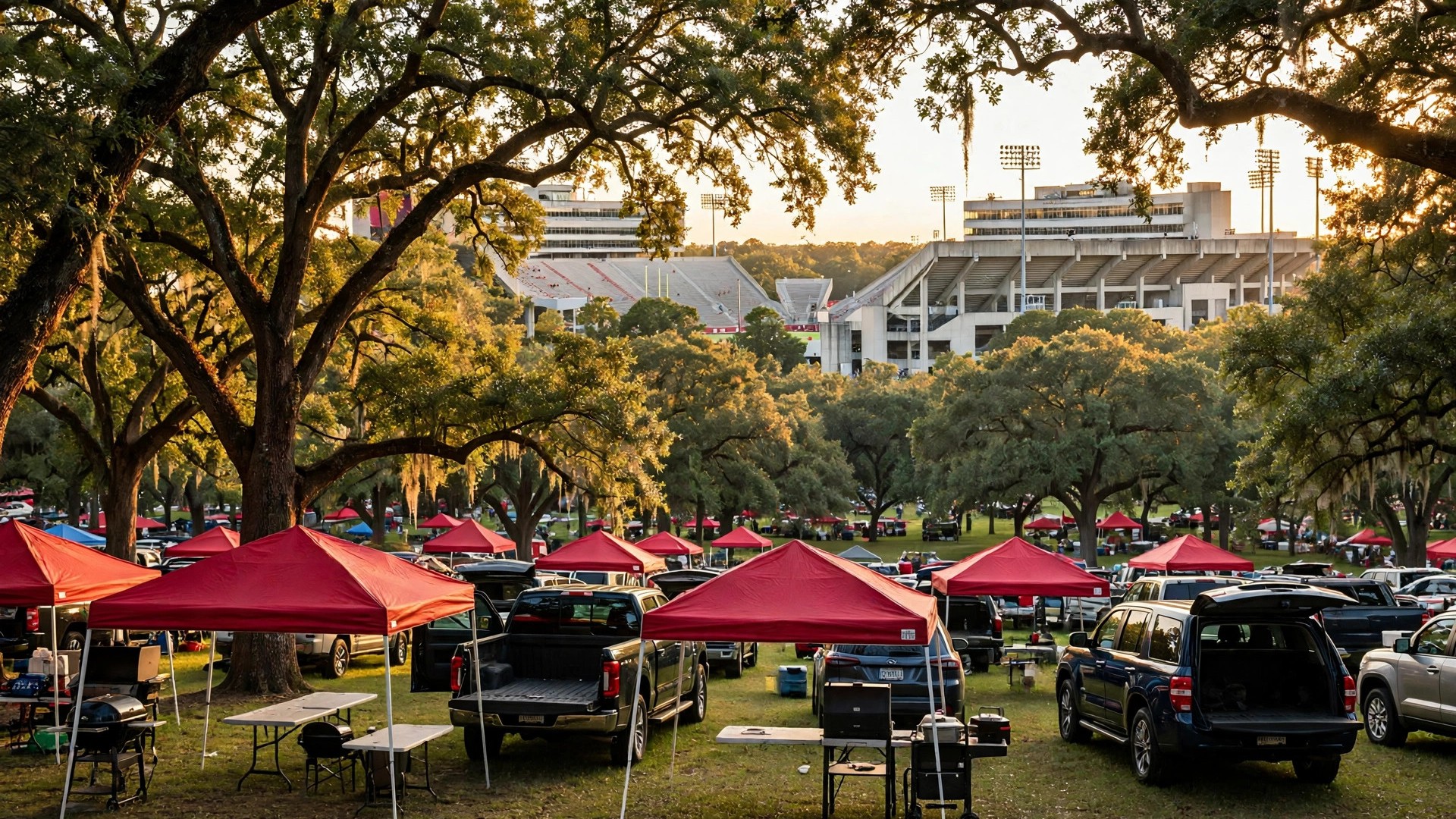
Ask anyone who has spent a Saturday in Oxford and they will tell you: ole miss football is only half the story. The other half is ten acres of oak trees, a sea of tents, a chant that echoes across campus, and a stadium that has been hosting Rebels football since 1915. Ole miss football blends Southeastern Conference power with a game day that feels like a garden party collided with a heavyweight fight — and both sides won.
This guide covers the whole picture: the program’s history, its stadium, its traditions, its rivalries, how the roster is built each year, and how to follow the Rebels wherever you live. Whether you are a lifelong fan or a curious newcomer, this is ole miss football explained from the ground up.
Ole Miss
Start with the name itself. “Ole Miss” is the beloved nickname of the University of Mississippi, founded in Oxford in 1848. The nickname’s exact origin is debated, but by the late 1890s it was attached to the yearbook and then to the school and its teams. Students, alumni and fans simply say Ole Miss the way other schools say their own names — with ownership and affection.
The university’s football team first took the field in 1893, making the Rebels one of the older programs in the South. When the Southeastern Conference was founded in 1932, Ole Miss was a charter member, and the school has played SEC football ever since. That long, unbroken membership shapes everything: the schedule, the rivalries, the recruiting footprint and the expectations.
Oxford itself is part of the identity. It is a small, literary, proudly Southern town, and on home Saturdays its population effectively multiplies. Hotels book out months ahead, restaurants fill by Friday night, and the whole weekend becomes a festival built around one game.
Ole Miss Rebels Football
On the field, ole miss rebels football carries a proud and sometimes defiant history. The program’s golden era came under head coach Johnny Vaught, who led the Rebels from 1947 to 1970 and returned briefly in 1973. Vaught’s teams won six SEC championships, and Ole Miss claims national championships in 1959, 1960 and 1962 — the 1962 squad remains the only Rebels team to finish a season with a perfect record.
Legendary quarterback Archie Manning starred in Oxford in the late 1960s and became part of college football folklore. A generation later, his son Eli Manning started at quarterback from 2000 to 2003, connecting two eras of Rebels fans through one family. The program’s modern history has included major bowl stages too — in 2023, Ole Miss won the Peach Bowl and secured the first 11-win season in school history.
The Rebels play in cardinal red and navy blue, and their identity has always leaned on speed, quarterback play and an offense willing to attack. For official schedules, rosters and program history, the school’s athletics home is olemisssports.com, the authoritative source for everything about the team.
Vaught-Hemingway Stadium: Home of the Rebels
Vaught-Hemingway Stadium at Hollingsworth Field has been the Rebels’ home since 1915, when students helped build the first grandstand on the site. The stadium takes its name from Judge William Hemingway, a law professor and longtime athletics committee chairman, and from Coach Vaught, whose name was added in 1982 after his championship career.
Today’s listed capacity is 64,038 after generations of expansion, including the bowling-in of the south end zone in 2002 and continued modernization since. It is not the biggest stadium in the SEC, but on a big Saturday it plays far above its size — the record crowd of 68,126 that watched Ole Miss upset Georgia in 2024 shows how the building swells for a marquee game.
What visiting fans notice most is how the stadium sits inside the campus experience. You do not park in a distant lot and walk through concrete. You walk through The Grove, past the tents and the oak trees, and the stadium simply rises at the end of the party.
The Grove and the Walk of Champions
The Grove is a roughly 10-acre grassy plot in the heart of campus, shaded by towering oaks, and it is widely described as the holy grail of tailgating. Fans claim spots, raise tents and set tables with a level of care — tablecloths, chandeliers, real silverware — that has to be seen to be believed. The unofficial motto says Ole Miss may lose a game, but it has never lost a party.
Two hours before kickoff, the scene peaks with the Walk of Champions. Coach Billy Brewer began leading the team through The Grove in the 1980s, and in 1998 the Walk of Champions arch — a gift from that perfect 1962 team — was erected at the route’s start. Fans line the path shoulder to shoulder as the Rebels pass under the arch and through the crowd toward the stadium.
If you attend one home game, build your whole morning around these two rituals. They are the soul of ole miss football, and no television broadcast fully captures the noise when the team emerges through the trees.
Hotty Toddy and Rebels Traditions
The greeting in Oxford is a question: “Are you ready?” The answer is the Hotty Toddy chant, a call-and-response cheer that Rebels fans trade in stadiums, airports and wedding receptions around the world. You will hear it before kickoff, after touchdowns and at random moments when two strangers spot each other’s colors.
Other traditions fill out the day:
- The Walk of Champions through The Grove before every home game
- The Hotty Toddy chant answering “Are you ready?”
- The Pride of the South marching band performing at halftime
- The Chucky Mullins Courage Award, honoring the late defensive back whose No. 38 jersey goes each spring to a defender who embodies his spirit
- A stadium-wide red-and-navy color split that turns the stands into a checkerboard for select games
Traditions like these explain why ole miss football weekends draw fans who never attended the school. The product is part football game, part reunion, part theater.
MS Ole Miss
Search engines and out-of-state fans sometimes type it as ms ole miss, and the label points to something real: Ole Miss is Mississippi’s flagship-name university, and its football team carries the state’s name into the SEC’s biggest stadiums. That role brings both pride and pressure, because the Rebels are judged against a conference that includes some of the richest programs in America.
It also explains the intensity of the in-state rivalry covered later in this guide. When two public universities share one small state, every recruiting battle, every Thanksgiving-week result and every headline is personal in a way that out-of-state fans sometimes underestimate.
For a taste of how deeply these matchups run, look at the numbers side of a recent Rebels clash in our Ole Miss vs Georgia player stats explainer, then note the viewing options in our guide on where to watch Georgia vs Ole Miss.
University of MS Football
Type it formally — university of ms football — and you find the academic side of the same story. The University of Mississippi fields its teams as a public research university, which means the football program operates inside the same world of enrollment, state funding and academic calendars as every other campus activity. Players are students first on paper and, in the modern game, public figures in practice.
That dual life shapes the roster. Rebels squads are built through high school recruiting across Mississippi, Louisiana, Alabama, Georgia, Texas and Florida, through junior college routes that have long been part of the state’s football culture, and through the transfer portal, which now reshapes depth charts every winter.
The result is a roster that turns over faster than it did in Vaught’s day but still reflects the region. When Ole Miss is good, it usually means a homegrown core of Mississippi talent surrounded by speed recruited from across the Southeast.
Rivalries That Define the Season
Two rivalries sit above the rest. The Egg Bowl against Mississippi State, first played in 1901 and contested for the Golden Egg trophy since 1927, is the state’s family argument, usually staged around Thanksgiving. The Magnolia Bowl against LSU renews one of the SEC’s oldest series, named in honor of the state flower shared by Mississippi and Louisiana.
Beyond those two, annual meetings with Alabama, Auburn and Arkansas carry decades of history, and newer SEC scheduling formats keep rotating fresh opponents into Oxford. Rivalry weeks change the temperature of the whole season: tickets spike, The Grove fills earlier, and a single result can define how fans remember an entire year.
Our companion viewing guide covers the broadcast side of one of those big weekends — see where to watch Ole Miss vs Georgia for how Rebels fans follow the team on television and streaming.
Ole Miss Football News
Following ole miss football news is a year-round habit in Mississippi. The cycle never really stops: signing day in the winter, spring practice and the spring game, summer recruiting camps, preseason camp in August, the season itself, then bowl season and the coaching-and-portal carousel in December and January.
The reliable way to follow it is to separate confirmed reporting from rumor. Official announcements — schedules, roster moves, kickoff times — come from the athletics department. Beat reporters in Oxford and Jackson provide daily coverage, while national outlets weigh in when the Rebels enter the rankings or the playoff conversation. Social media moves fastest and is wrong most often, so treat unverified portal and injury rumors as entertainment until a named, accountable source reports them.
How to Follow the Rebels All Season
Watching from home is straightforward. SEC football airs across the ESPN family of networks and ABC, with the conference’s own SEC Network carrying many Rebels games and a mountain of studio coverage. Streaming services that carry those channels work for cord-cutters, and the school’s radio network remains a beloved option for fans who grew up listening rather than watching.
A simple weekly routine keeps you current:
- Check the official site Monday for kickoff time and TV details
- Read one beat report midweek for injury and depth-chart news
- Watch the Grove and stadium social feeds on Friday for game-week color
- Follow live stats during the game if you cannot watch
- Catch the postgame press conferences for the coaches’ own account
Frequently Asked Questions
When did Ole Miss start playing football? The Rebels first fielded a team in 1893 and became a charter member of the SEC in 1932.
What is the capacity of Vaught-Hemingway Stadium? The listed capacity is 64,038. The stadium opened in 1915 and has been expanded many times since.
What is The Grove? A 10-acre oak-shaded tailgating landmark in the center of campus, famous nationwide, and home to the Walk of Champions before every home game.
What does Hotty Toddy mean? It is the Rebels’ signature chant and greeting, answered to the question “Are you ready?” Its exact origins are debated, but its meaning to fans is simple: loyalty.
Who is Ole Miss’s biggest rival? Mississippi State, in the Egg Bowl, is the in-state answer, while LSU in the Magnolia Bowl is the Rebels’ great border rivalry.
Where can I find official team information? The athletics department site, olemisssports.com, publishes schedules, rosters, ticket information and official announcements.
Ole miss football endures because it is bigger than the standings. It is oak trees and archways, quarterbacks named Manning, a chant traded between strangers, and a stadium full of people who believe their Saturday is the best in America. Spend one weekend in Oxford and you will understand — then you will start planning the next one.
