

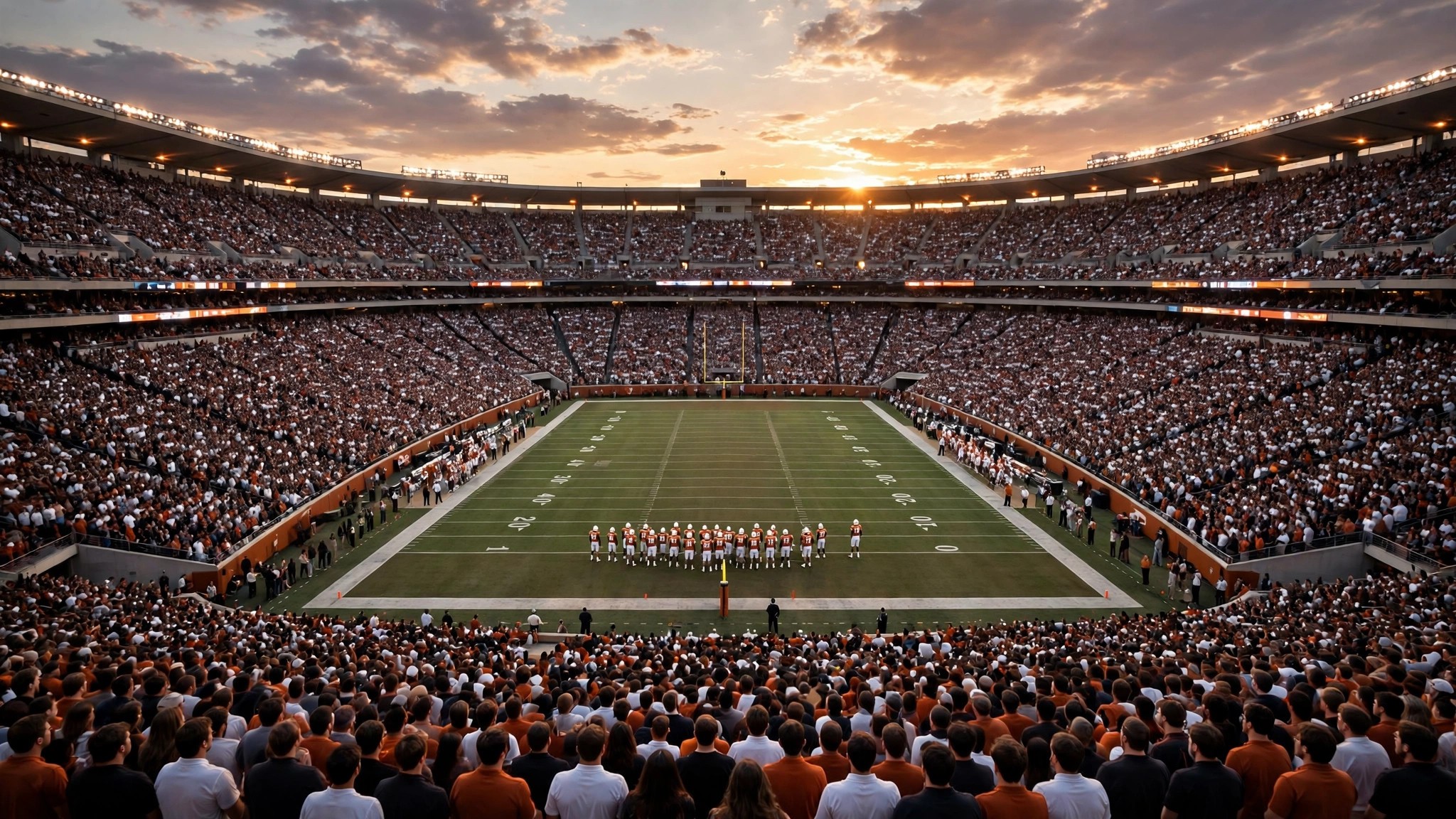
If you are new to texas football, you are stepping into one of the loudest, proudest traditions in American sport. This is a program where Saturdays in Austin feel like a state holiday, where burnt orange covers entire city blocks, and where a single hand sign can start a conversation with a complete stranger.
This guide walks you through everything a fan actually needs. You will find the history that made the program famous, how the roster is built, what game day at the stadium feels like, how tickets work, and the traditions that separate a casual viewer from a real Longhorns supporter.
Whether you follow every snap or you are just learning the basics, texas football rewards the time you put into it. Start here, learn the language of the fan base, and the season will make a lot more sense.
Texas Longhorns Football
Texas Longhorns football is the name most fans use for the program that represents the University of Texas at Austin. The team plays at the highest level of college football, in the Football Bowl Subdivision, and it now competes in the Southeastern Conference after joining the SEC in 2024.
That move changed the weekly challenge. Instead of the old conference slate, the Longhorns now measure themselves against some of the deepest rosters in the country, week after week. For fans, it means bigger road trips, louder visiting sections, and very few easy Saturdays.
The program claims four national titles, won in 1963, 1969, 1970 and 2005. Those championship seasons still shape how the fan base judges every new team. A good season is welcomed, but the standard in Austin has always been set by those title years.
Texas Longhorns
The Texas Longhorns name covers all of the university’s sports teams, but football is the one that drives the conversation. The burnt orange and white colors are instantly recognizable, and the longhorn steer logo is one of the most copied silhouettes in college athletics.
On campus, the identity is everywhere. Students, alumni and fans who never attended the school all wear the same colors, and that shared look is part of why the program travels so well. A road game for Texas rarely feels like a road game, because thousands of supporters make the trip.
Understanding the wider Longhorns identity helps new fans read game day better. The band, the cheer squads, the alumni groups and the student section are all part of one connected show, and football Saturday is where they all meet.
UT Football
UT football is simply the short name fans and local media use every day. You will see it on headlines, radio shows and social media, and for many supporters it is the fastest way to talk about the team without spelling out the full name.
The short name also reflects how central the program is to the university itself. When people in Austin say “UT” in the fall, the conversation is almost always about football first. Classes, work schedules and family plans quietly bend around kickoff times.
If you are searching for news, tickets or schedules, using both the full name and the UT version will surface more results. Official sources tend to use the full branding, while fan communities and local coverage lean heavily on the shorter form.
Longhorn Football
Longhorn football, in the singular, is another everyday phrase in the fan vocabulary. Commentators use it, former players use it, and you will hear it in recruiting coverage when a prospect talks about wanting to play “Longhorn football” as a style and a standard.
That phrase carries an expectation. It points to physical play, depth across the roster, and a team that expects to contend late in the season rather than simply reach a bowl game. Coaches in Austin are judged against that idea from their very first press conference.
For new fans, collecting these name variants matters more than it sounds. Search results, ticket listings and broadcast guides all mix the forms, so knowing they all mean the same program keeps you from missing useful information.
Longhorns Football
When fans talk about Longhorns football as a weekly experience, they usually mean the full package: the game, the tailgates, the band and the walk into the stadium. The on-field product is only part of what people plan their autumn around.
Home games are played at Darrell K Royal–Texas Memorial Stadium, which opened in 1924 and now holds 100,119 fans. It is one of the largest stadiums in the country, and on a big night the noise rolls across the field in a way television never quite captures.
If you want a sense of how a single matchup is broken down statistically, our explainer on Ohio State vs Texas player stats shows which numbers matter after a game like that.
University of Texas Football
University of Texas football is the formal name, and it is the version you will find in record books, academic writing and official conference documents. It is also a useful search term when you want historical material rather than daily news.
The formal history is long. Football in Austin stretches back to the nineteenth century, and the program grew alongside the university into a national brand. That long arc explains why the fan base spans generations, with grandparents and grandchildren often attending the same games.
The university setting matters on game day, too. The stadium sits on campus, so a home Saturday blends student life, alumni reunions and city energy into one event. Arriving early and walking the campus is part of the experience, not just a way to kill time before kickoff.
Longhorns
Just “Longhorns” is enough for most conversations in Texas. The word points to the teams, the fans and the culture all at once, and it connects directly to Bevo, the live steer mascot who appears at games and has become one of the most famous mascots in sport.
The other symbol every new fan learns quickly is “Hook ’em Horns,” the hand sign made by extending the index and pinky fingers. You will see it in photos, on flags and across the stadium after big plays. It is a greeting, a celebration and a goodbye, all in one gesture.
The music completes the identity. “Texas Fight” is the fight song played after scores, while “The Eyes of Texas” is sung with a slower, more emotional weight, and fans often stay to sing it after games, win or lose.
Why Texas Football Matters in the SEC
Texas football changed conferences, but it did not change expectations. In the SEC, the margin for error is smaller, the road environments are tougher, and a single loss can reshape the playoff picture. That pressure is exactly why the move excited so many fans.
The rivalries give the season its shape. The Red River Rivalry against Oklahoma, played at the Cotton Bowl in Dallas during the State Fair of Texas, splits a stadium down the middle in burnt orange and crimson. Few scenes in sport look or sound like it.
A few anchors define every season for fans:
- The Red River Rivalry against Oklahoma in Dallas
- Home Saturdays at Darrell K Royal–Texas Memorial Stadium
- The renewed Lone Star Showdown against Texas A&M
- A bowl game or College Football Playoff run in December and January
Planning around those moments helps, and our guide to where to watch Texas vs Florida shows how viewing details are usually listed for a big conference matchup.
Tickets, Roster and Following the Season
Tickets for big home games move fast, so fans usually start with the official athletics site and its verified resale partners. Prices rise for rivalry games and fall for early-season non-conference dates, and flexible fans can often find better value by watching listings during the week of the game.
The roster is best followed through official depth charts released during the season. College rosters turn over every year through recruiting, graduation and the transfer portal, so a name you learned last fall may be gone by spring. Checking the current chart before a game keeps your expectations grounded.
For the official home of the program, schedules, roster news and ticket links, start with Texas Longhorns athletics. It is the source other coverage builds on, and it is updated by the school itself.
Finally, pace yourself across the season. Our explainer on how long a football game lasts helps new fans plan a full game-day schedule, from tailgate to the final whistle.
Game Day in Austin, Step by Step
A home Saturday follows a rhythm that regulars learn by heart. Tailgates open early around the stadium and across campus, and the smell of barbecue becomes part of the morning. Fans in burnt orange drift toward the stadium in waves, stopping for the band, for photos and for one last round of predictions with friends.
Inside, the pregame sequence builds the noise slowly. The team entrance, the band formations and the first sing-along moments turn a large crowd into a single voice. By kickoff, even first-time visitors usually understand why locals treat the day as an event rather than a three-hour appointment.
After the game, win or lose, many fans linger. The postgame song, the walk back through campus and the slow traffic out of Austin are all part of the ritual. Planning your ride and your meeting point in advance makes that ending far more relaxed, especially after night games when crowds leave at once.
First-timers should arrive earlier than they think they need to. Security lines, campus walks and photo stops all take time, and the best part of the day often happens well before the opening kickoff. Give yourself the morning, and the stadium experience will feel complete rather than rushed.
Texas Football FAQ
Where do the Longhorns play their home games?
Home games are played at Darrell K Royal–Texas Memorial Stadium in Austin, a venue that opened in 1924 and seats 100,119 fans.
How many national titles does Texas claim?
The program claims four national titles, from the 1963, 1969, 1970 and 2005 seasons.
When did Texas join the SEC?
Texas joined the Southeastern Conference in 2024, beginning a new era of conference rivalries for the program.
What is the biggest rivalry game?
The Red River Rivalry against Oklahoma at the Cotton Bowl in Dallas is the signature game, with the Texas A&M matchup close behind.
Follow texas football for a full season and the patterns become familiar: the colors, the songs, the hand sign and the expectation that Austin should contend. That is the pull of the program, and it is why new fans tend to stay for years, passing the same seats, songs and Saturday habits down to the next generation of supporters.
